




AI continues to top the technology agenda as organisations seek to unlock opportunities for value creation across key workflows.
For many, their AI future is closely intertwined with Microsoft’s AI platform, and the impactful use of tools such as Microsoft 365 Copilot and Microsoft Foundry – building on foundations of individual productivity to embed agentic capability at the heart of key processes.
This journey is the essence of Microsoft’s own vision for Frontier Transformation, first introduced at Microsoft Ignite in November, which sets the standard for AI adoption across ambitious, forward-thinking organisations.
It also reflects our own journey with the Microsoft AI platform, starting with a strategic investment as customer zero to build AI capability within our own business, using those learnings to inform customer engagements at every turn. This approach has not only unearthed significant internal benefits and brought real-world, repeatable value to our customers, but has also cemented our credentials as a Frontier Partner.
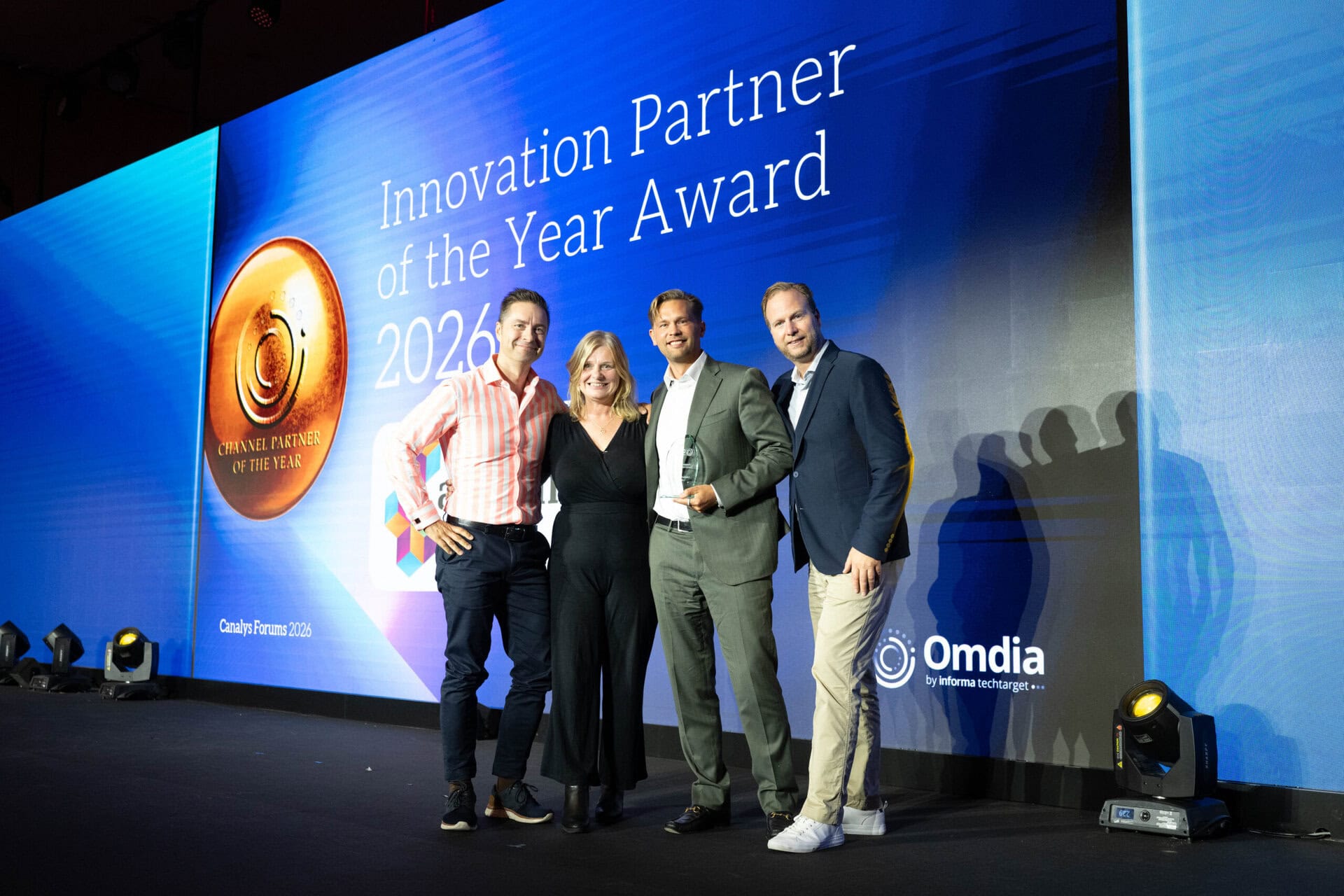
Earlier this year, we were awarded Microsoft’s Frontier Partner Badge, acknowledging us as a leading Microsoft AI authority and adding us to a select group of Microsoft partners.
Awarded by Microsoft to organisations seen as leading transformation through an AI-first, human-led approach, this badge rewards the capability and delivery excellence of our teams across Microsoft AI and cloud disciplines. It also recognises our track record of translating AI plans into solutions focused on real business outcomes, built with clear governance and delivered to meet the day-to-day reality of our customers.
In this piece, we’ll explore how our own lived experiences of AI adoption has informed the Frontier Transformation we now deliver at scale for our customers.
Individual productivity as a foundation
When Microsoft 365 Copilot launched, we identified business-wide adoption not as a long-term goal, but as a business imperative. The goal was to put AI capability close to where people already work and build internal knowledge early, so that we could genuinely lead customers with an AI-first approach built through owned experiences.
One of the biggest lessons through this process was that adoption only works when AI capability is aligned to real-world use cases. We worked closely with departments to understand where Microsoft 365 Copilot could create the most value. By giving users clear guidance on where AI could assist within the context of their current role, we removed one of the biggest barriers to adoption.
We also quickly established that small-scale pilots can create a level of AI disparity that has the potential to harm long-term adoption. By opening up initial trials to more users, organisations can more effectively validate capability, while naturally unearthing champions.
This experience has heavily influenced the adoption frameworks now in place for customers, including our focused approach to pilot programmes.
Agentic adoption focused on high-value workflows
One of the biggest steps on the Frontier Transformation journey is the shift from individual productivity tools and prompt-based copilots to autonomous, production-grade agents equipped to execute real-world business processes.
As we evolved our own AI strategy, we collaborated extensively with individual business units to identify high-value workflows that presented the best candidates for agentic redesign. Central to this was ensuring that any agent deployed was truly embedded within the current operating model, saving time and reducing manual effort without the need to retrofit the full process around the agent’s capabilities.
Several agents are now embedded across our business, supporting with everything from RFP preparation to HR enquiry response and sales order automation. Built to meet internal requirements, these agents also form a tailorable foundation for the ready-to-deploy AI solutions we offer customers to accelerate the agentic redesign of key workflows.
The deployment of Copilot Studio has also empowered our users with the capability to build their own agents around self-identified workflows, operating with templated frameworks and within strict guardrails to create impactful solutions wherever needed.
User enablement makes adoption stick
AI only lands if people know how to use it well, which is why user enablement formed a core part of our internal transformation journey.
To support our initial business-wide Microsoft 365 Copilot adoption, we delivered in-person and remote training alongside dedicated promptathons to build knowledge and establish baseline skills. This focused on the real-world use cases we’d identified, ensuring clarity as to where AI was expected to add value. The impact is visible in the numbers. Copilot adoption is now at 94% across the business, while 85% of users have completed our internal certification path.
We’ve also created a dedicated AI Insiders community, made up of over 100 internal champions, who share prompts, test ideas, and drive ongoing best practice use across the business.
Responsible AI adoption founded in clear governance models
The more AI becomes embedded in work, the more important the guardrails become. Responsible AI usage is not a side consideration, but one of the defining principles for adoption success.
For us, this has meant creating policies and governance models around how AI is used, how data is handled and what level of control needs to be retained. We’ve always operated with a strategy-first, tools-second philosophy, which ensures any AI tools we deploy are tightly aligned with the needs of our business and our existing governance standards.
We bring this same approach to our customers, ensuring that any AI initiative starts with strategic foundations and clear governance definitions before deployment.
Shift your AI strategy forward
If you’re planning your next step with the Microsoft AI platform, we’re ready to help you move forward with confidence.
Backed by our Frontier Partner Badge, we’re showing customers what they can really expect from AI – delivering projects grounded in effective governance, aligned with the way they work and built to deliver scalable value after launch.
If that sounds like the expertise you need in an AI partner, book a call with our experts.